

Business IT
Network design, business Wi-Fi, firewalls, VoIP phones, servers and ongoing support for small and mid-sized businesses.
Business IT servicesDCC plans and connects separate technologies, including networking, cameras, access control, automation and AV, into one coordinated system that's documented, supportable and checked for compatibility before anything is installed.
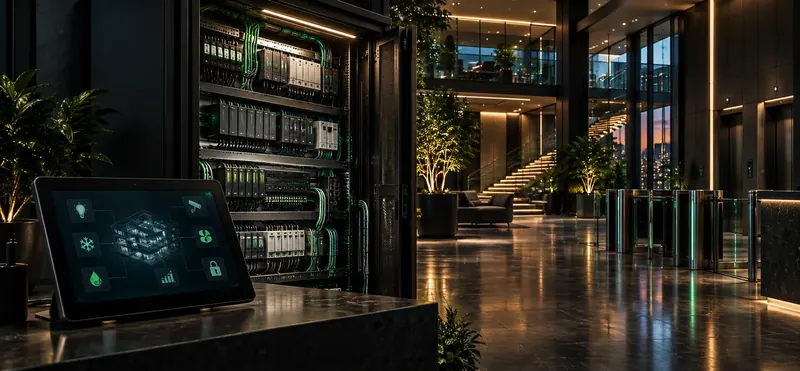
Most buildings end up with technology from several vendors that was never designed to work together. Integration is the planning and network work that makes it behave like one system.
The network side of security systems, done properly.
Relays, sensors and controllers that run on schedules, triggers or remote commands.
Displays, audio and conferencing that work when the meeting starts.
One network that can carry every system, with the right separation between them.
Planning before purchasing.
For requirements that don't match an off-the-shelf product.
Integration work is usually about making existing pieces cooperate, not replacing everything.
The same straightforward process applies whether it's one stubborn problem or a full installation.
Describe what's going on or what you're planning. A rough description is enough to start.
Existing equipment, cabling and coverage are reviewed on-site or remotely, so recommendations build on what you already own.
You get a clear recommendation, with options and costs, before any work begins.
The work is completed cleanly and documented, with ongoing support available when you want it.
A systems integrator plans how separate technologies connect, then makes them work together: networking, security devices, controllers, AV and communications. The goal is one coordinated system instead of several isolated ones.
Compatibility is reviewed before deployment. If an existing system can't integrate cleanly, you'll know before you buy anything, along with your options.
Yes. Integration projects often involve other trades. DCC focuses on the network, configuration and integration side and coordinates with the people handling power, construction or monitoring.
Yes. The same approach applies to businesses and to larger homes with cameras, gates, automation and AV. See residential technology for home-specific services.
Network design, business Wi-Fi, firewalls, VoIP phones, servers and ongoing support for small and mid-sized businesses.
Business IT services
Whole-home Wi-Fi, structured cabling, smart home systems and home theater for homes in Central PA.
Residential technology servicesTell DCC what's going on. A short description is enough to start the conversation.